
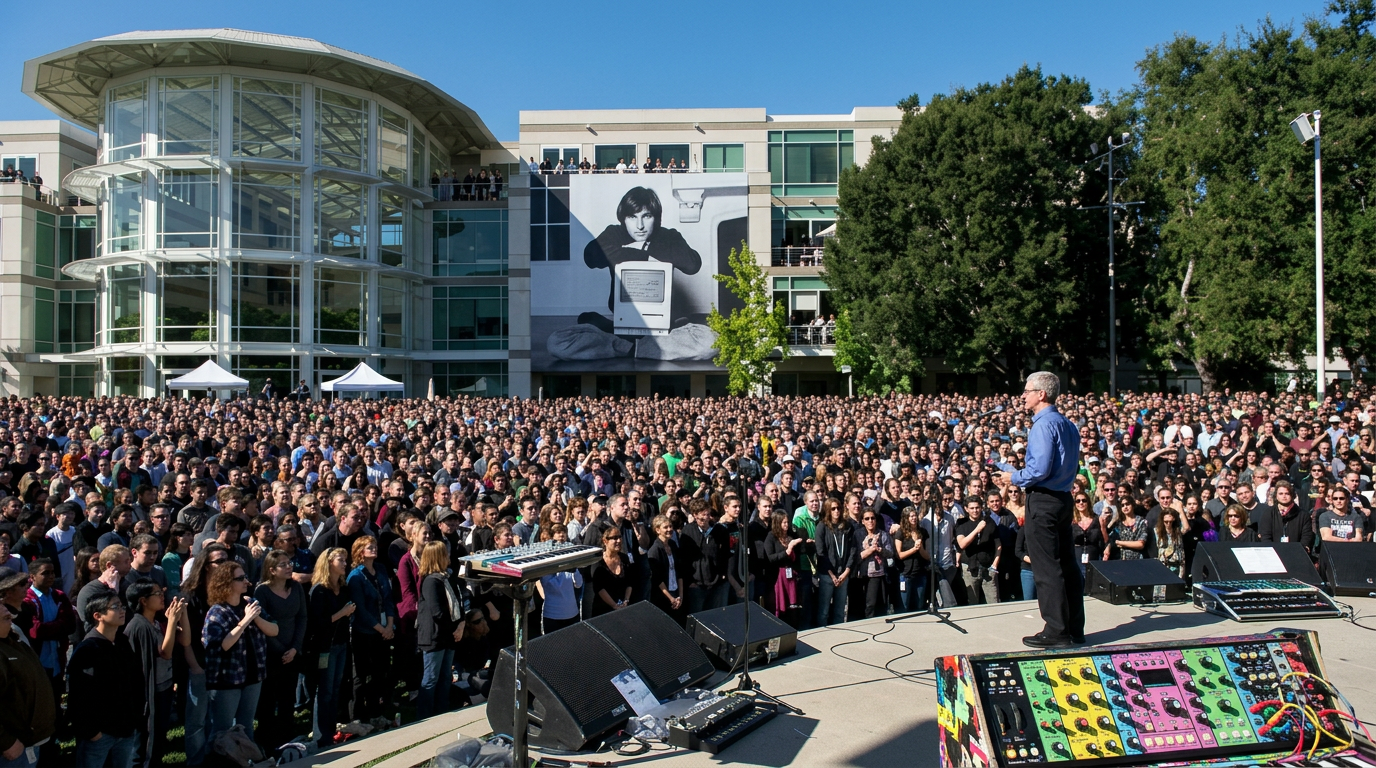
October 2011. Steve Jobs had just died.
Apple held a memorial at their campus.
I watched it.
Tim Cook spoke. Jony Ive spoke.
Then this guy got up.
I didn’t know who he was. But I could tell — from the way people leaned in, from the way Tim introduced him — that he was close. Really close.
“He is fondly known as the coach,” Tim said.
The guy walked up. Looked out at the crowd. And said:
“Wow. I’m humbled by this. I looked for the opportunity to have my time to talk about Steve.”
And then, quieter:
“My friend.”
(How many people can call Steve Jobs “my friend” at a memorial? Who was this guy?)
—
FAST FORWARD
This week I’m playing around with Claude.
I feel that I don’t coach like anyone. Unique. Don’t fit neatly into a box.
So I got curious.
“Who’s a coach that’s most like me?”
(I was half expecting it to say “Error 404: No match found.”)
It said Bill Campbell.
Bill, who??? Never heard of him.
So I did what any normal person would do.
I Googled him for the next three hours.
Bill Campbell. The Trillion Dollar Coach.
And there he was.
The guy from Steve Jobs’ memorial!!!
—
WAIT, WHO IN TARNATION IS BILL CAMPBELL?!
He coached:
- Steve Jobs (Apple)
- Tim Cook (Apple)
- Eric Schmidt (Google)
- Larry Page and Sergey Brin (Google)
- Sundar Pichai (Google/Alphabet)
- Jeff Bezos (Amazon)
- Sheryl Sandberg (Meta)
- Jack Dorsey (Twitter/Block)
(Basically, that’s Wikipedia’s “people who built the modern economy” page. No big deal.)
Here’s the thing: before any of this, Campbell was a football coach at Columbia. His record? 12 wins. 41 losses.
And then he went on to help build the most valuable technology ecosystem in history.
I guess the score was never the point. Somebody try telling that to a teenager.
—
THE INSULT
When Eric Schmidt became Google’s CEO, investor John Doerr suggested he work with a coach.
Schmidt’s reaction? He thought it was an insult.
He was a mature executive running a serious company. What could a (lousy) football coach from Pennsylvania possibly tell him?
But Campbell didn’t give up easy.
And here’s the wild part: in the end, he not only coached Schmidt; he ended up coaching Apple and Google at the same time. While they were competing.
How?
Because he never touched strategy. Never touched product. Never told Jobs what to build or Schmidt how to beat the competition.
He coached the humans.
Schmidt put it this way: “The coaching is the highest priority — because getting the humans right determines the outcome.”
(A $1 trillion operator saying the humans are the priority. Not the product. Not the strategy. The humans.)
—
OKAY… BUT WHY ME?
Good question. I’m not coaching Google. Not yet anyway.
(And on the surface? Nothing alike. He had a full head of hair and a Pittsburgh accent. I’ve got a beard, a hat, and a Canadian “sorry” reflex.)
But here’s the line I can’t stop thinking about:
“Getting the humans right determines the outcome.”
That’s what I do too — just in a different room. Not the boardroom. The money room.
His layer was how leaders held each other.
Mine is how you hold money.
—
THE PART EVERYONE SKIPS
Most advice lives on the surface. Change the behavior. Try harder. Be more disciplined. Very helpful.
Six months. Maybe twelve. Things look great.
Then eighteen months later? Back to the old patterns.
They try the apps. They try the budgets.
It doesn’t stick.
Not because they’re weak. Because the thing underneath was never touched.
—
THE THING THAT KEEPS HAPPENING
THE THING THAT KEEPS HAPPENING
Most money problems aren’t about numbers. They’re about a loop.
Here’s a common loop that might be familiar:
Feeling (scarcity, pressure) → Story (I have to rescue / prove / reward) → Action (spend, give, avoid) → Result (worse scarcity)
Repeat.
Three versions:
The People Pleaser. Picks up every check. Says yes to things they can’t afford. Story: I’m the one who provides. Even when it’s digging a deeper hole.
The Reward Spender. Frugal panic to celebration spending. Commission comes in? Already spent. Story: I earned this. Until the next panic.
The Avoider. Doesn’t look until overwhelm forces it. Story: If I look, I’ll confirm what I’m afraid is true.
Different habits. Different stories. Same structure underneath. Change the habit without touching the story? The loop just finds a new outlet.
—
WHY NOBODY WANTS TO LOOK
Because looking at the loop means looking at where the story came from. A household where money was scarce — or plentiful but loaded with strings. Wiring. Learned early. Reinforced for decades.
The story made sense once. It was protection. The problem is, it’s still running. Long after the original threat is gone.
—
SO WHAT DO I ACTUALLY DO
Bill Campbell didn’t coach strategy. I don’t coach budgets. (I have tools — plenty of them. But tools aren’t the work.)
The work is: repair the pattern → change the behavior → change the spreadsheet → actually have money left over.
The real test: what happens eighteen months out, three years out, when there’s no one watching. Did the loop come back? Or did it actually break? That’s transformation.
—
BACK TO STEVE JOBS’ MEMORIAL
Bill Campbell didn’t own companies. He owned relationships. I don’t coach budgets. I coach the person the budget runs on.
That’s the layer most people skip.
If you’ve tried the surface stuff and it didn’t stick — this is it. Let’s find out →

Avraham
Your Financial Coach
P.S. 12 wins, 41 losses as a football coach. Lousy football coach. Legendary people coach. (And me? My friend Pete from Australia calls me a legend — but I think that’s Aussie slang for “thank you.” Annnyyway, I’ll let you be the judge. Book your call.)



Comments are closed.