
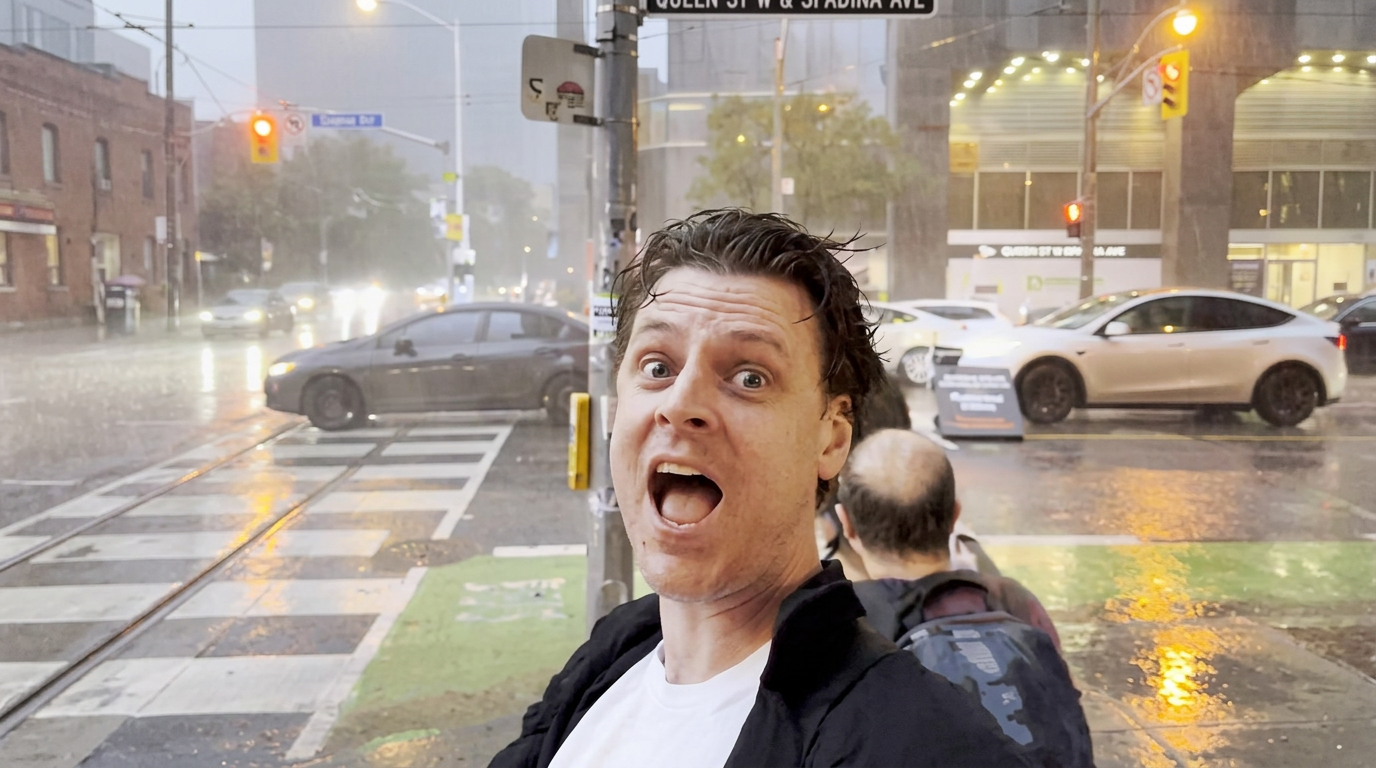
I was on a Zoom call when it started.
A loud pinging off my office window. Sounded like somebody was throwing frozen meatballs at the glass.
I wasn’t far off. They said the hail was the size of golf balls. Some bigger.
Then the sky went black in about four minutes. The rain came down so hard you couldn’t see the end of the street, and trees started snapping. At the trunk.
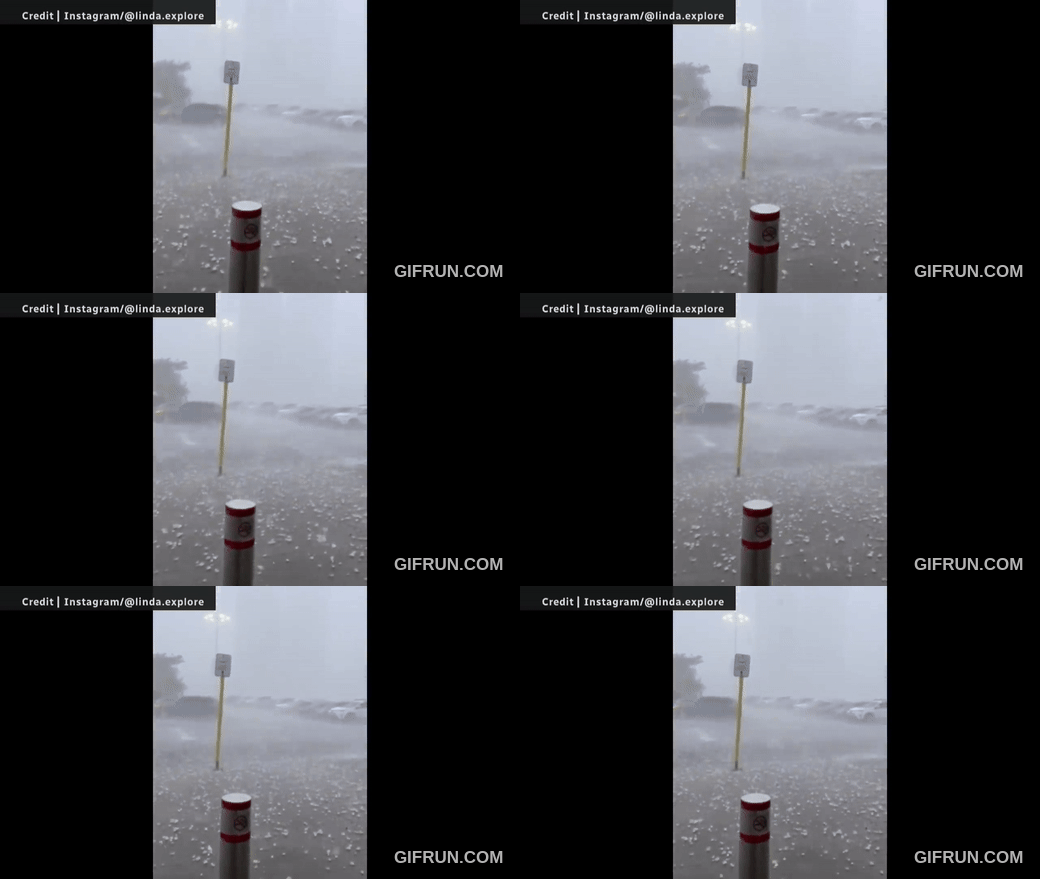
And I’m on a call, being a professional, while approximately one thousand percent of my brain went: the kids.
So I sent the fastest text of my life…
Me:
Get inside
My wife:
That’s an understatement
The hail were like ice cubes
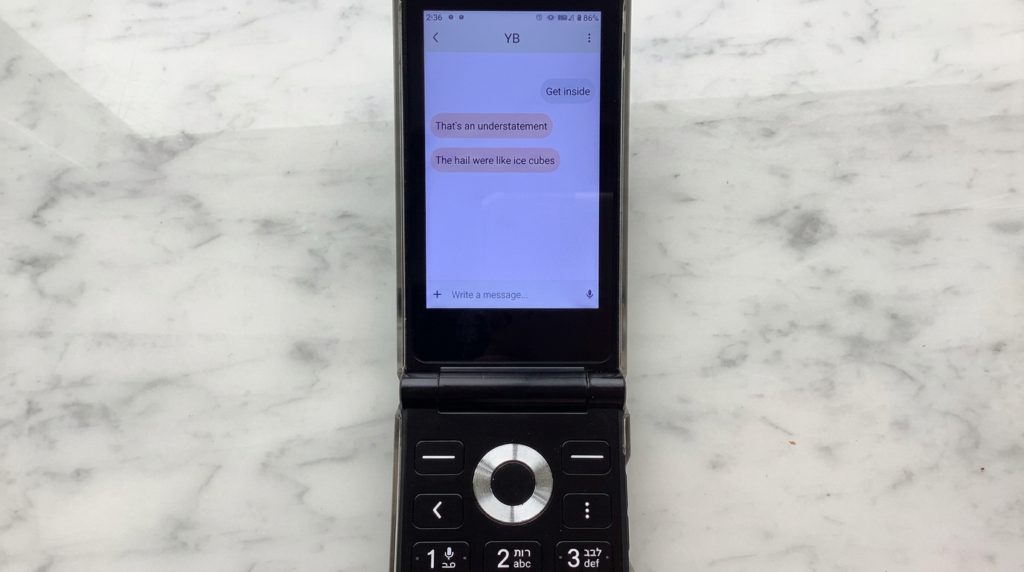
(There is a natural disaster occurring. Ice is falling from the sky. And my wife’s contribution to the moment is a light editorial note on my word choice. This is also why she edits my emails. It’s also why they’re any good.)
Toronto looked like a disaster movie. People sprinting into Tim Hortons for cover. (Which is the most Canadian sentence I have ever written). ☕️🇨🇦
And with all of it — the whole city, that much damage — nobody was seriously hurt.
I’m still not over that one. (Looking at You — with a capital Y. 👆 Thank you.)
—
THE SIX SECONDS THAT WOULDN’T GO AWAY
Afterward, I went looking for footage. And one clip kept coming back. Everywhere. Viral.
Our man in Tim Hortons, taking shelter, where every Canadian crisis gets processed.
Look at him. Safe. Baked goods right there.
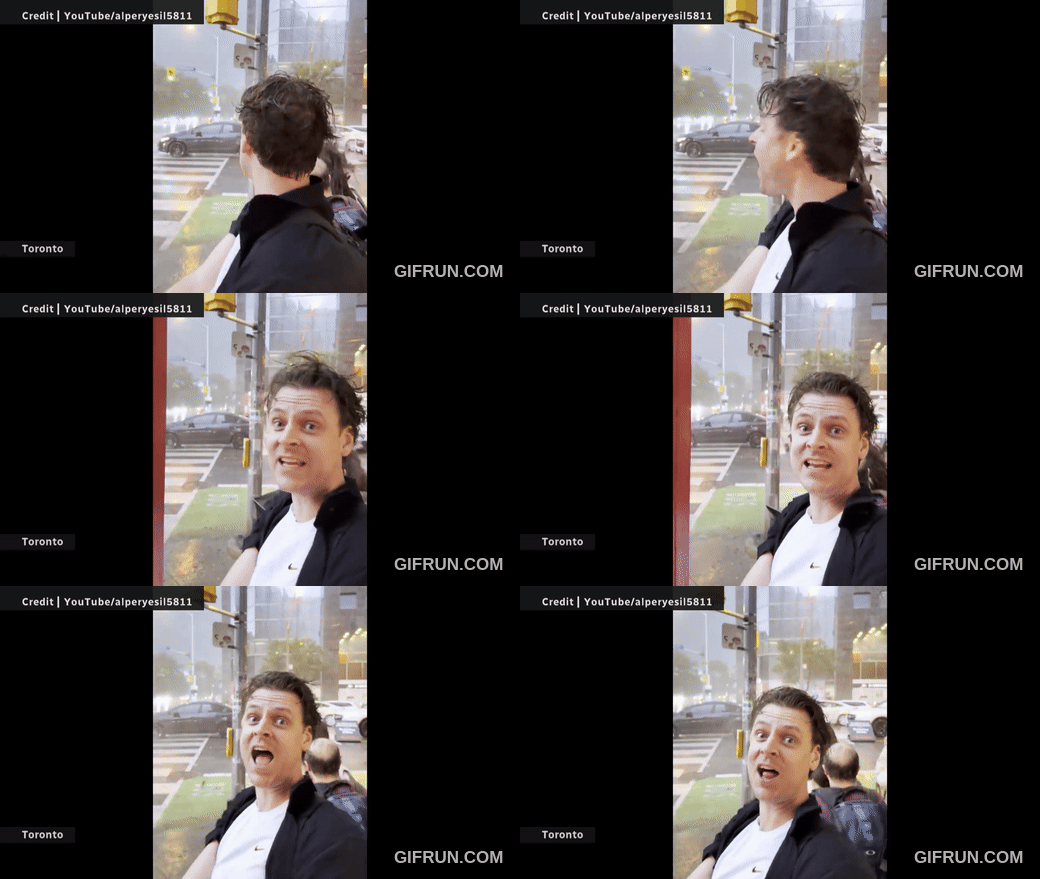
What’s up with this guy?
(Look at that face. He’s already decided he’s going to do something. You can see it. This is not going to end well.)
And the thing is — just before this, someone else got whacked by an A-frame sign crossing the street. Flipped them right over.
And then he decides to make a run for it…
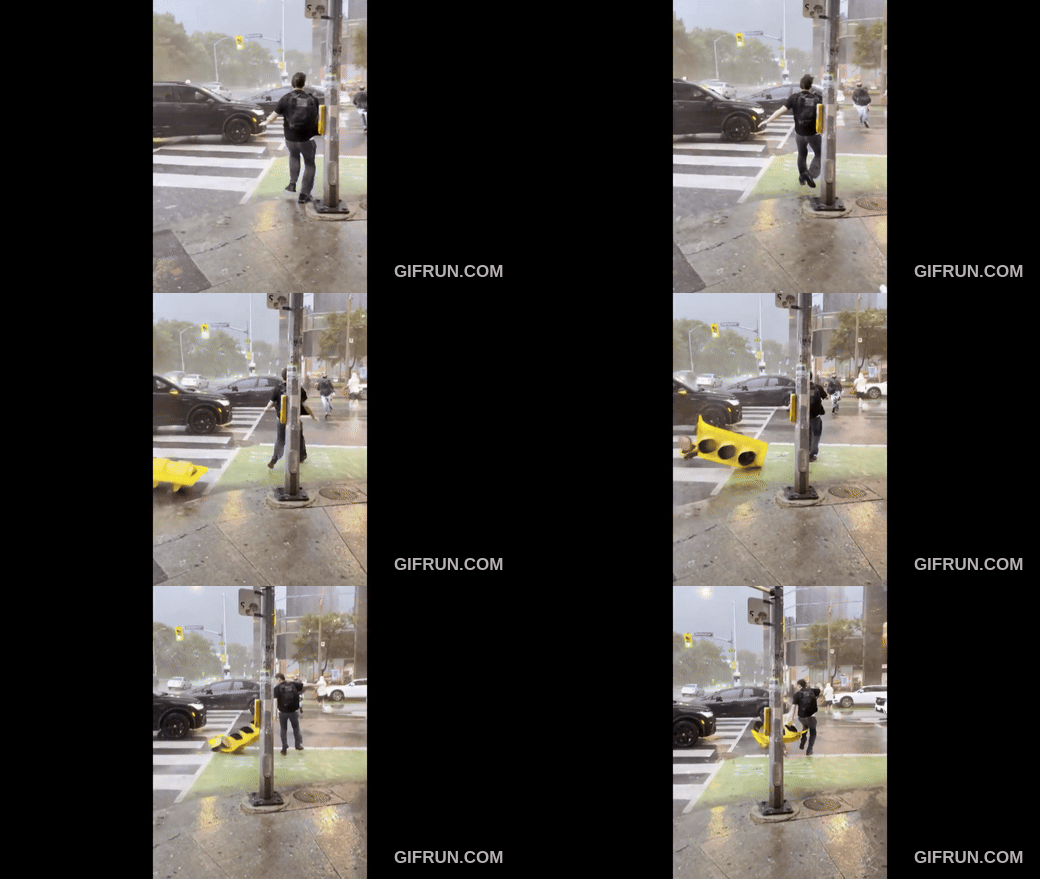
The light missed him by a hair. The car behind him was less lucky. 😳
People standing right there could not work out why he ran. He was fine. He was dry. He had a roof and was within arm’s reach of a Boston cream.
And I don’t think he could tell you either. Something was happening, and standing still while something is happening feels almost impossible.
—
HERE’S THE PART I CAN’T STOP THINKING ABOUT
That clip went everywhere because it’s exciting. A traffic light chasing a man down the street is unbelievable footage.
You know what I couldn’t find? A single video of someone drinking a double double during the storm. (By the way — a double-double is a Canadian way to say a coffee with two creams, two sugars).
No videos of a basement not flooding.
Not one. No account posted six seconds of dry concrete. Nobody captioned a photo of a wall doing exactly what it was supposed to do.
Chaos has footage. Boring doesn’t.
The guy who stayed in Tim Hortons and drank his coffee? That was the smart move. But nobody’s watching that clip.
Reactive can be chaotic. And figuring out chaos can feel like competence.
Here’s why: chaos gives you a role. The emergency tells you what to do. You don’t have to decide what matters — the situation decides for you. You just respond.
Proactivity doesn’t give you that. There’s no fire, so there’s nothing to put out. You have to decide, on a quiet day, that something matters — before it’s screaming at you.
That’s harder. Not because it takes more effort. Because it takes more belief.
Proactive is a regular boring Tuesday.
Which is most of why people do the reactive thing and skip the proactive thing, and then wonder why they’re always in the middle of something.
—
AND THEN THERE’S MY FRIEND
I have a friend who’s the calmest person in any room. Always composed. Always has a plan. I’m sure he has issues — because he’s a human being — but I never know about them. He’s not the chaotic type.
All week, everybody had a storm story. He didn’t have one.
He’s the proactive one in this story, and last summer he dug up his foundation.
Not a crack you patch. The whole perimeter. Excavated, waterproofed, backfilled. Machines around the entire house for weeks.
Thirty-five thousand dollars.
The waterproofing itself was about twenty. The rest? Getting to the repair. The concrete porch. The patio stones. Everything that had to come out first and go back in after.
Done properly, he told me, that job lasts fifty years.
And notice what made that hard. The leak wasn’t an emergency. A slow leak never is. It doesn’t flood anything, doesn’t ruin a weekend, doesn’t demand one single thing from you. It just sits there quietly getting worse for years while you get on with your life.
Reactive responds to whatever’s shouting. A slow leak never shouts.
Which is exactly why most people live with one until the day it stops being slow.
—
OK SO HERE’S THE ANNOYING PART
He got nothing out of it.
No footage. No story. (Well. I suppose he’s getting this one.) His house looks exactly the same as it did before he spent thirty-five thousand dollars, and exactly the same as it did before the biggest storm anyone here can remember. His week was boring while everyone around him was on the phone with adjusters.
The reward for getting it right is an absence.
Nothing happens. That’s the payoff. That’s the entire return — a thing that doesn’t occur, on a day you don’t notice, in a basement you don’t go into.
No flood. No call to the adjuster. No story at the table.
Just… like a regular Tuesday.
A regular boring Tuesday.
Fifty years of it, if it’s done right. He bought fifty years of nothing happening, and he’ll be lucky to see half of them. Some of what he paid for will land on whoever owns that house in 2061, and they will never know his name.
There’s no moment. Nobody throws a party for a dry basement. Your spouse doesn’t walk downstairs and gasp in delight. The roof that doesn’t leak makes no sound at all.
Proactive gives you nothing to feel and nothing to post.
Which is why he was the quiet one that week. And why almost nobody does what he did.
—
SO.
Here’s where I make it about money. (You knew it was coming.)
When’s the last time you dealt with money on a day when nothing was wrong?
Not the month the transmission went. Not the week that your paneled JennAir fridge compressor sizzled out. A regular Tuesday. Sun out, nothing on fire, and you sat down and handled something that hadn’t happened yet.
For a lot of people, the honest answer is never. And not because they’re careless — some of them are extremely on top of it. They’re excellent in the reactive lane. Fast, capable, unflappable. Something breaks, and they fix it every time.
That’s the trap. Reactive feels like competence.
Something goes wrong, you handle it, and you get to feel like a person who handles things. There’s adrenaline in it. There’s a story after. You were needed.
Proactive offers none of that. You sit down on a quiet day and spend money on a problem you don’t have yet, and then nothing happens. No hit. No story. Nothing to tell anybody.
So it doesn’t feel like doing something. It feels like doing nothing.
That’s the actual reason people skip it. It isn’t laziness or ignorance. It just doesn’t register as action.
But my friend wasn’t doing nothing last summer. He was doing the most useful thing anybody on his street did all year.
It just didn’t look like anything. And it didn’t feel like anything. And there’s no footage of it.
The guy at the Tim Hortons got a story. A few hundred thousand people have watched it by now.
My friend got a boring week.
One of those is what winning actually looks like — and it will never once look like it.
That’s the part you have to decide to believe before you’ll do it. Because nothing about the moment will tell you.
Nobody claps. Nothing satisfying happens. And then you just… keep living.
If you’re tired of reactive — and ready for the boring version that actually works — let’s talk →

Avraham
Your Financial Coach
P.S. Here’s the kicker. Two weeks before the storm, one side of his foundation was already failing — he knew it. Even that wall held. It’ll cost another eight thousand to fix. He’ll pay it, handle it, and move on. No drama. No traffic lights to dodge.
P.P.S. Nobody congratulated him on the dry basement. I’m doing it here. 💛



Comments are closed.