
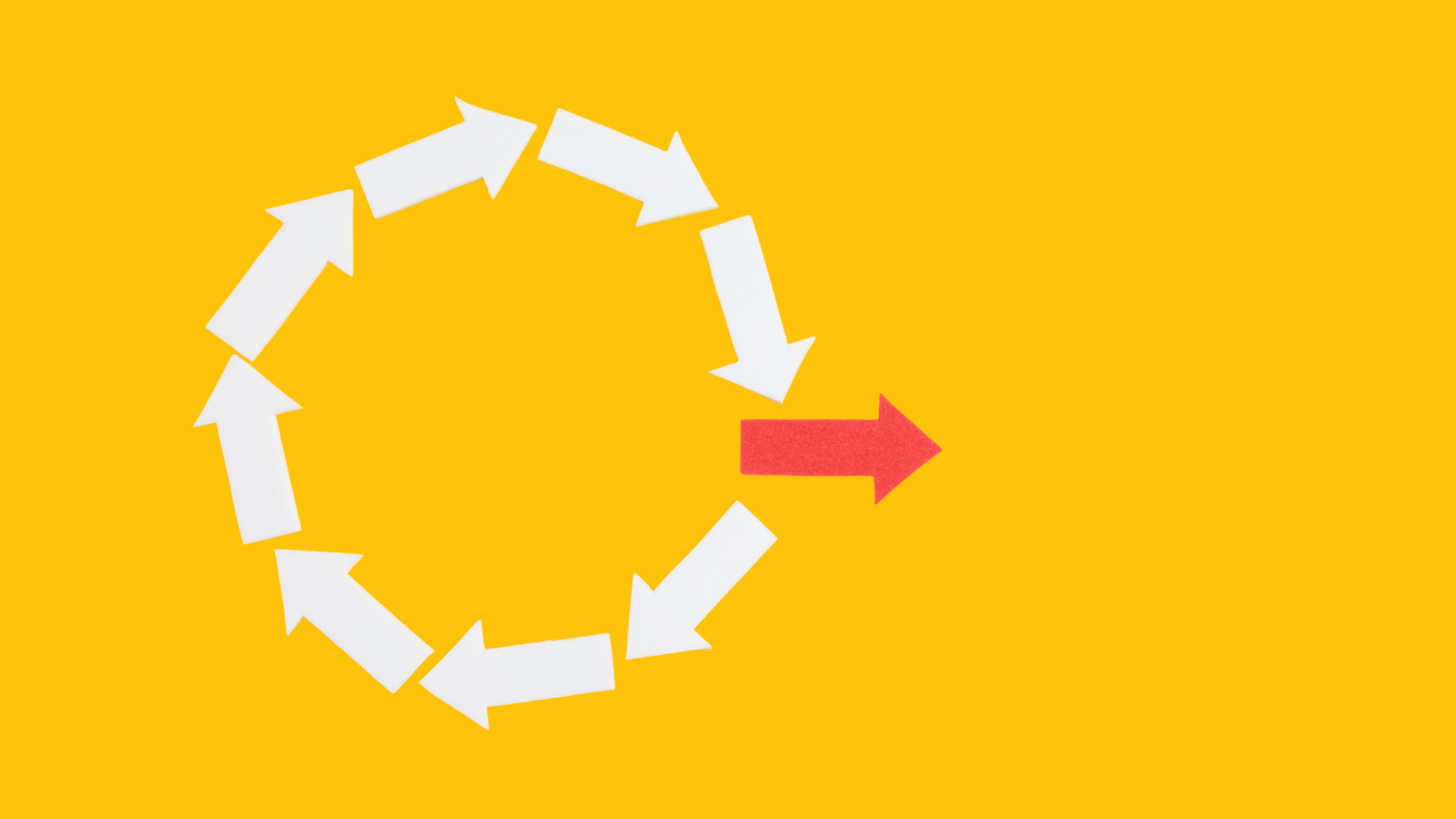
You know that thing you keep doing with money?
Or maybe it’s the thing you keep not doing.
The budget you’ve been meaning to start—for three years. The account you haven’t opened. The conversation you keep dodging. The bill you shove in a drawer and hope it self-combusts. The fancy budgeting app you downloaded, opened once, and ghosted completely.
Or maybe it’s the opposite—the spending you swore you’d stop. The impulsive purchase you “needed.” The little reward you “deserved.” The thing you bought to feel better that somehow made you feel worse.
That’s not laziness. That’s not a character flaw. That’s not you “being bad with money.”
That, my friend, is a pattern.
And until you can see your pattern, no budget, app, or color-coded spreadsheet is going to save you.
Your Spreadsheet Is Just a Scorecard
People think a budget will fix their money problems. It’s a nice thought. It’s also wrong.
A budget shows you what you did. It doesn’t show you why you keep doing it.
- That overspending you can’t quite explain? It’s a pattern.
- That bill you keep “forgetting” to pay? Pattern.
- That tightness in your chest when you check your bank balance? Pattern.
- That fight you keep having with your partner about money? That’s two patterns colliding. 💥
The spreadsheet isn’t the solution. It’s just a scorecard—keeping track of all the invisible patterns running the show underneath.
Your Patterns Are Running Your Life
Here’s the tricky thing about patterns: you don’t notice them because they feel like you.
- The way you avoid checking your accounts? That’s a pattern.
- The way you overspend when you’re stressed? Pattern.
- The way you get defensive when your partner mentions money? Pattern.
- The way you’re too scared to spend even when you have plenty? Also a pattern.
None of these are personality traits. They’re just sequences that got stuck on repeat, like a bad 90s song.
Two Flavors of Patterns: Loose Grip vs. Tight Grip
Most money patterns fall into one of two buckets. See which one sounds familiar:
The Loose Grip 🫳
This is the “laissez-faire” approach to finance. It’s all about avoiding, ignoring, and winging it.
- Motto: “I’ll deal with it later.”
- Vibe: Optimism without a plan.
- Star Players: The Ostrich, The Procrastinator, The Reward Seeker.
The Tight Grip ✊
This is the white-knuckle approach. It’s about over-controlling, obsessing, and worrying.
- Motto: “But what if something bad happens?”
- Vibe: Anxiety dressed up as responsibility.
- Star Players: The Hoarder, The Worrier, The Scorekeeper.
Different patterns, same root cause: money doesn’t feel safe. One type responds by looking away. The other responds by gripping tighter. You might be one, you might be both, or you might be married to your opposite (FUN, right? 😬).
Name That Terrible Tune: Common Money Patterns
See if any of these sound familiar:
- The Procrastination Push-Off: Bill arrives → “I’ll deal with it later” → Later never comes → Pile grows → Anxiety builds → Even harder to face → Repeat.
- The Reward Spiral: Hard day → “I deserve this” → Buy the thing → Feel better for 5 minutes → Feel guilty for 5 hours → Have another hard day → Repeat.
- The Control Grip: Uncertainty → Must. Track. Everything. → Constant vigilance → Exhaustion → Still don’t feel safe → Grip tighter → Repeat.
- The Fresh Start Fantasy: Monday/New Month/January 1st → “THIS time I’m getting it together” → Make a beautiful plan → Feel great → Do nothing → Wait for next fresh start → Repeat.
- The Ostrich Dive: Uncertainty → “If I don’t look, it’s not real” → Avoid → Problem grows → Surprise! It’s very real → Panic → Repeat.
- The Cinderella Budget: New Year energy → Build a beautiful spreadsheet → Color-code everything → Feel proud → Life happens → Abandon by February → See you next January → Repeat.
Here’s the good news: The Pattern Isn’t You.
This is the most important part, so read it twice.
The pattern isn’t your personality. It’s not who you are. It’s just a program that got stuck running in the background.
- You’re not “bad with money.” You’re running a pattern that doesn’t serve you.
- You’re not “cheap.” You’re running a pattern born from fear.
- You’re not “irresponsible.” You’re running a pattern that helped you cope—once—and never got the memo to turn off.
Patterns can feel like your identity. But they’re not. They’re just habits that went underground. And habits? Habits can be changed.
How to Break the Spell
You can’t just delete a pattern. But you can interrupt it.
- Name It. This is step one. Naming your pattern creates distance. When you can say, “Oh, look, I’m doing The Midnight Amazon Spiral again,” you’re no longer trapped inside it. You can see it. Give your pattern a name. The “I’ll Start Monday” Loop? The Partner Shutdown? The Fear Freeze? Write it down.
- Notice It. This is most of the work. Just catching yourself mid-pattern is a revolutionary act.
- Pause. Between the trigger (the stress) and the behavior (the spending/avoiding), there’s a gap. It might feel microscopic. Your job is to widen it. Just for a second.
- Ask One Question. “Is this the pattern talking, or is this what I actually want to do?”
- Do One Thing Differently. You don’t have to overhaul your entire life overnight. Just don’t do the thing you always do. Even once.
Interrupt the pattern enough times, and you start building a new one. A better one.
The Real Work Is Under the Hood
You’re not bad with money.
You’re just running patterns. Patterns that feel like you, but aren’t you. The budget won’t fix the pattern. The app doesn’t know the pattern exists. But you can find it. Name it. And start to change it.
That’s the real work. Not the spreadsheet. The pattern underneath.
Ready to find the pattern running your money?
Let’s figure out what’s on repeat—and how to change the track.
Avraham
Your Financial Coach
P.S. Once you see the pattern, you can’t unsee it. And that’s exactly the point. 👁️


Comments are closed.